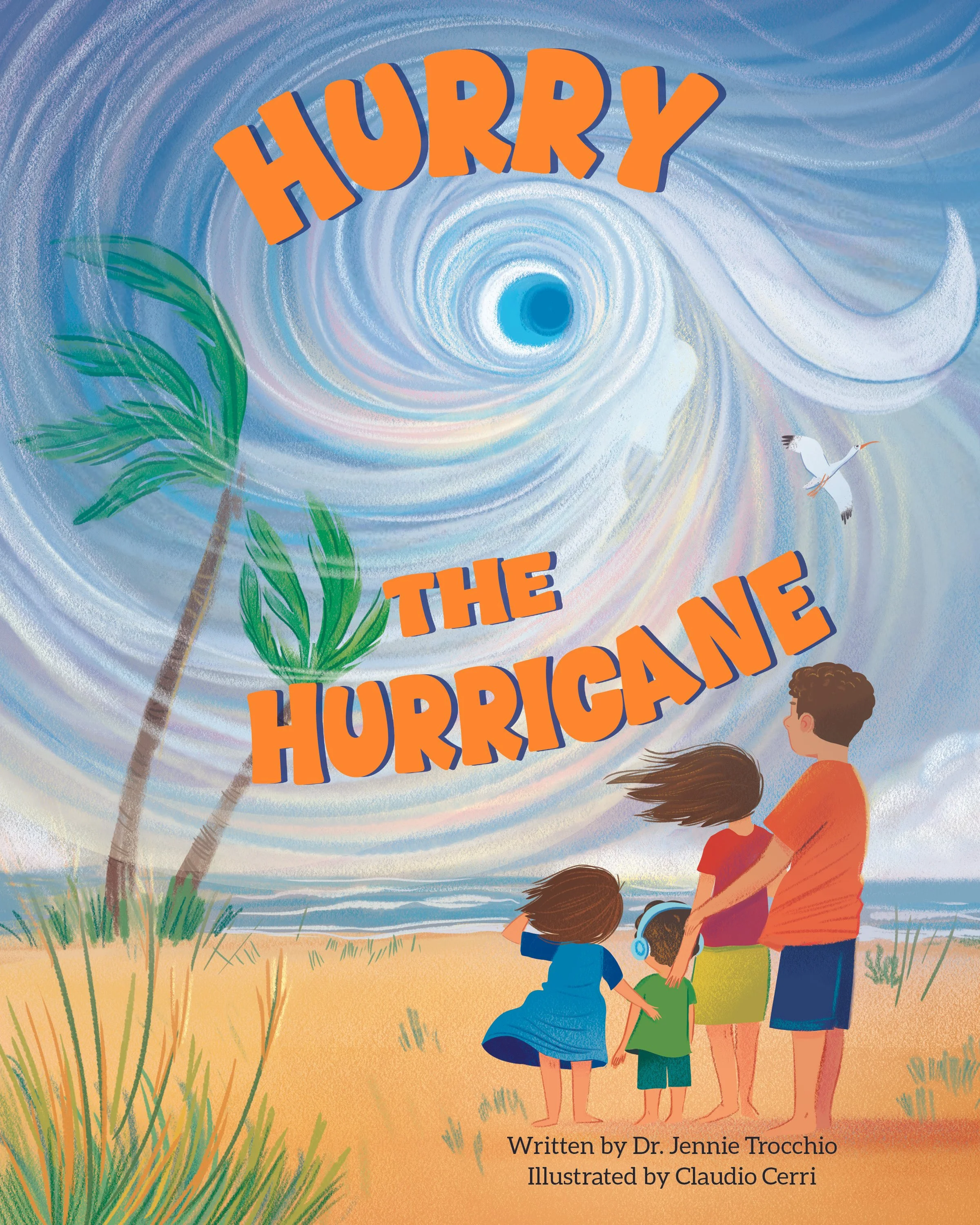
Get ready!
Hurry the Hurricane is on its way!
My first children’s book, Hurry the Hurricane, will be published by Blue Balloon Books on November 10, 2026. Available in hardcover and paperback.
Preorder your copy now!


Published by

The Story behind Hurry
Hurry the Hurricane has actually been with me in some form for years. I spent more than twenty years living in South Florida, first moving there to attend the University of Miami (go Hurricanes!). Through my work as a special education teacher and later as an autism educator and developmental specialist, hurricane season became part of the rhythm of life—not only for me, but for the children and families I supported.
Over the years, I noticed that when a hurricane was approaching, children were often surrounded by signs that something was happening without necessarily being included in the conversation. The weather changed. School might close. Grown-ups watched the news, bought supplies, moved things inside, and sometimes talked with a sense of urgency. For a child who didn't understand what was happening or what would happen next, all of that uncertainty could feel overwhelming.
So I began writing simple social stories for individual children and families. The goal wasn't to promise that nothing scary would happen or that everything would go exactly as planned. It was to help make the unfamiliar more familiar: What is a hurricane? Why does it happen? What might I see and hear? What will my family do? What can I do? What happens afterward?
That experience reinforced something I've seen throughout my career: information can change a child's relationship to an unfamiliar situation. When children understand what's happening and know what to expect, they aren't simply passive observers of something happening around them. They can have a role. That understanding can lead to empowerment, and empowerment can help confidence grow.
Somewhere along the way, one of those hurricane social stories became Hurry. I loved the idea of personifying the hurricane—not as a villain or something intending to frighten children, but simply as nature. Hurry doesn't mean to scare anyone. He's a hurricane, and he's here to help children understand what that means. In the book, he becomes a gentle guide through an experience that may otherwise feel unfamiliar.
That's why, to me, Hurry the Hurricane isn't really a disaster story. It's an experience story. Its emotional arc isn't, “Will everything be okay?” as much as it is: “What is this? What should I expect? What can I do? Oh...I can do this.”
And maybe most importantly, the child never has to do it alone. Families prepare together, grown-ups have a plan, children have meaningful ways to participate, and the story ultimately lands in connection. The goal isn't fearlessness. It's helping a child feel informed, empowered, confident, and supported.
That's really the heart of Hurry: when children understand what's happening and know what to expect, they are better able to face the unfamiliar with confidence—and with the reassurance that they don't have to face it alone.